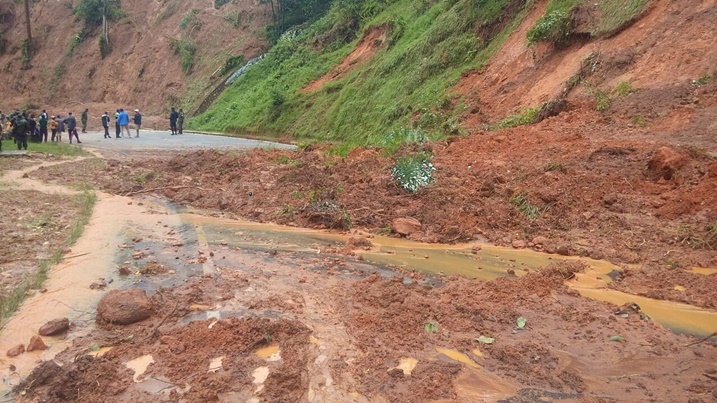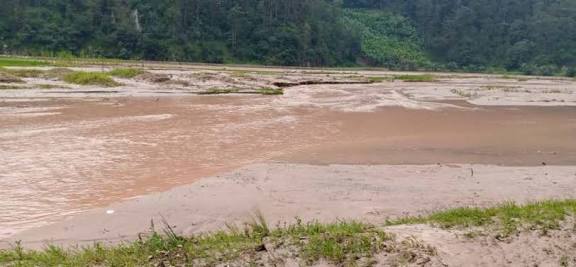

As the Government of Rwanda strives to increase agricultural productivity and achieve food self-sufficiency, it continues to grapple with a major challenge: more than 27 million tonnes of soil most of it arable land are washed away by erosion every year, significantly reducing crop yields.
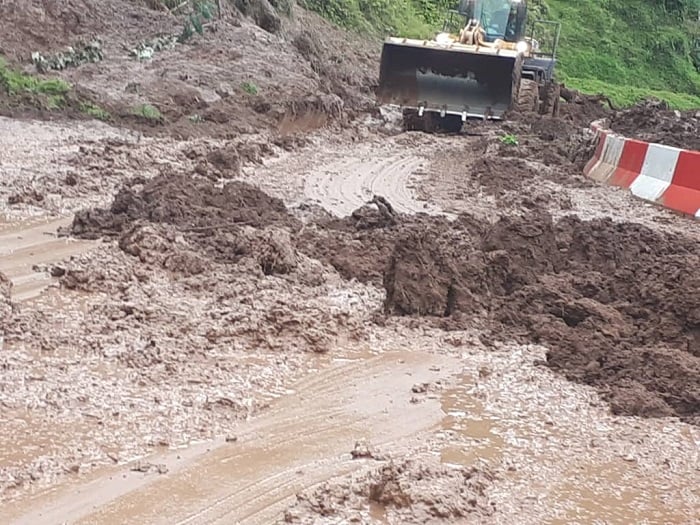
In most cases, the soil lost is the most fertile topsoil, rich in nutrients and essential for high productivity. This loss is largely driven by Rwanda’s natural landscape, which is dominated by steep hills, combined with human activities such as unsustainable farming practices, construction, degradation of rivers and their banks, livestock grazing, bush burning, deforestation, and the destruction of shrubs and vegetation cover.
In response to this challenge, sustainable solutions have been prioritized, particularly the promotion of conservation agriculture. Farmers are trained to minimize soil disturbance, mulch their fields to protect the soil from erosion, and practice proper crop diversification and intercropping to prevent soil compaction and degradation.
Farmers report that conservation agriculture has nearly doubled their yields compared to previous practices. As a result, they are better able to meet household needs, achieve food security, produce surplus for markets, and improve their livelihoods.
One farmer, Nyirahabimana Zirida, said that conservation agriculture yields better results than conventional farming, while also reducing labor and fertilizer costs—making it more profitable for farmers.
“Previously, I harvested only 70 kilograms of beans. With conservation agriculture, I now harvest 110 kilograms. On plots that are not well protected, I get about 75 kilograms, while those cultivated traditionally yield only 40 kilograms.”
She added:
“Today, farming has helped us improve our lives. I pay health insurance, cover school fees for two children, and all this is thanks to conservation agriculture. Before, erosion used to wash away our crops into the valleys because the land was left bare.”
“Where I used to harvest 400 kilograms of maize, I now get 750 kilograms, while the labor and fertilizer I use have been reduced by almost half.”
John Twiringiyumukiza, a Technical Advisory Officer with Tearfund and the Canadian Foodgrains Bank for Central and West Africa, said they will continue to promote conservation agriculture because it has proven effective in increasing productivity while protecting the environment.
“Our goal is to reach at least 60,000 farmers practicing conservation agriculture. This will help them increase production while conserving the environment and protecting soil that was previously lost to erosion.”
Dr. Patrick Karangwa, Director in charge of Promoting Agricultural Transformation at the Ministry of Agriculture and Animal Resources (MINAGRI), said the government is addressing soil degradation through the Fifth Strategic Plan for Agriculture Transformation (PSTA 5).
“Soil erosion causes major economic losses every year. Through collaboration with various partners, MINAGRI developed PSTA 5 to transform agriculture and establish sustainable, climate-resilient food systems.”
More than one million hectares of land are at risk of erosion, with 867,000 hectares still lacking adequate soil conservation measures. Each farming season, the country loses large quantities of crops, including over 22,000 tonnes of maize and 15,000 tonnes of beans, due to erosion.
Conservation agriculture is therefore considered a key approach to tackling climate change in Africa, as it protects soil and water resources while conserving biodiversity.