
Residents of Gicumbi District who benefited from the Green Gicumbi Project say their lives and livelihoods have significantly improved after working with the project, which helped restore a healthy environment in areas that were at risk of turning into desert-like land.
Green Gicumbi was launched in January, 2020, following Rwanda’s receipt in 2019 of over USD 32 million in funding from the Green Climate Fund (GCF). The project is implemented through the Rwanda Green Fund (FONERWA).
The initiative was introduced after it was established that Gicumbi District is among the areas most affected by climate change related disasters, largely due to its steep and mountainous terrain. The project’s main objective was to address climate change impacts while building a green and environmentally friendly economy.
Key interventions focused on strengthening community resilience to climate change, promoting climate-smart agriculture, supporting eco-friendly settlements, and implementing various environmental protection measures.
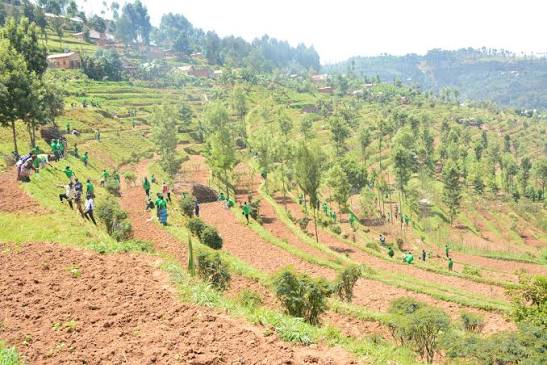
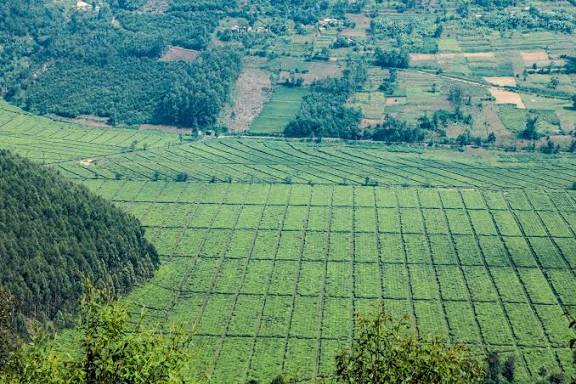
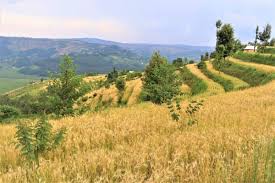
Over six years of implementation, the project established 600 hectares of progressive terraces and 600 hectares of radical terraces. Farmers were also supported with high-quality, climate-resilient seeds and access to fertilizers, particularly organic manure.
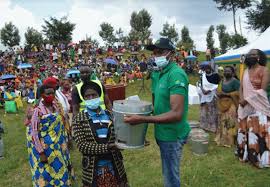
More than 99,000 jobs were created through different project activities. Over 157,500 people directly benefited from the project, while 464,000 residents were reached through various interventions.
In addition, more than 25,000 people were trained on climate change adaptation and resilience-building strategies.
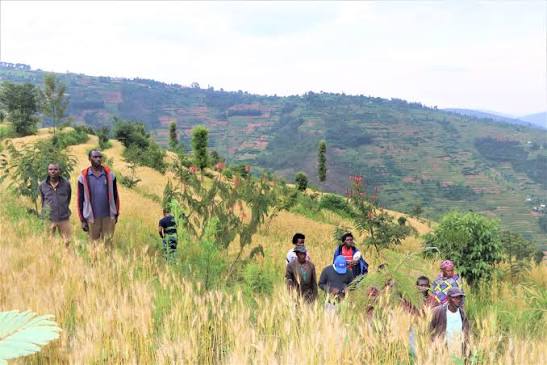
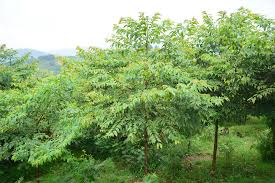
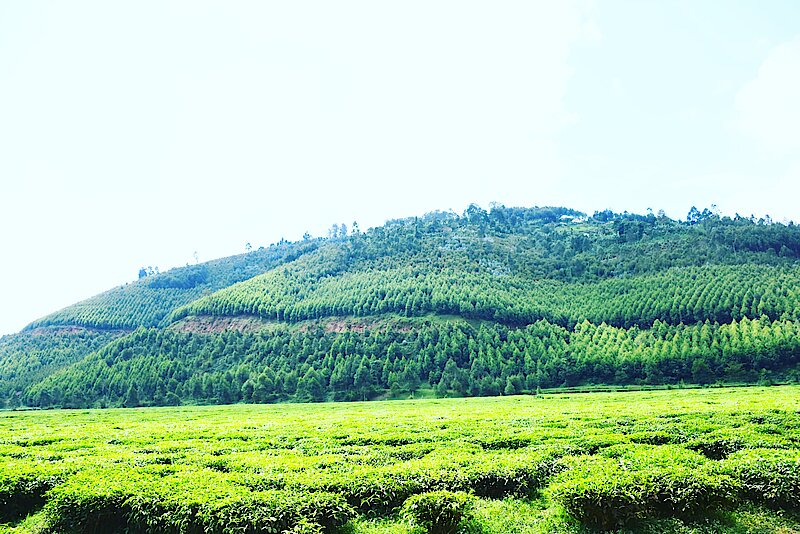
Nearly 10,000 hectares of land were planted with trees integrated with crops, while 1,370 hectares of farmland were planted with soil-binding trees. Another 40 hectares were planted with climate-resilient hillside coffee, and 50 hectares with hillside tea to address flooding that had been affecting tea farmers in the Mulindi marshland.
Two model villages were constructed, accommodating 100 households relocated from high-risk areas. The project also provided more than 3,300 household rainwater harvesting tanks, collecting over 4,740 cubic meters of rainwater, alongside 193 large water tanks, including underground reservoirs, with a total capacity of 4,670 cubic meters.
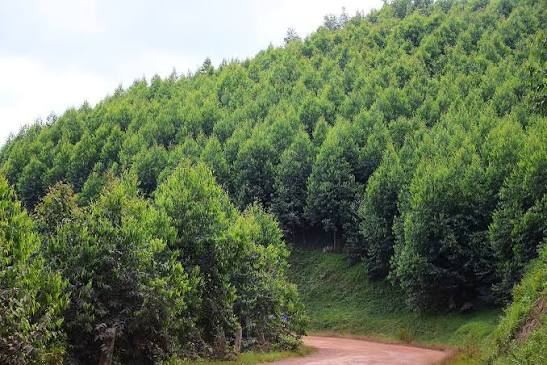
Green Gicumbi also supported both citizens and the government in restoring forests across more than 2,200 hectares, using improved, climate-resilient seedlings. Additionally, over 31,000 households received energy-saving cookstoves, aimed at reducing deforestation and lowering greenhouse gas emissions.
As a result, more than 214,000 tons of carbon emissions that would otherwise have been released into the atmosphere were avoided through the project’s interventions.
Some beneficiaries who received support to rehabilitate their forests say they initially misunderstood the project, especially since their forests were previously unproductive.
Aloys Mbarushimana, from Gacurabwenge Cell in Byumba Sector, whose forest on Bishyita Hill was rehabilitated, said:
“Most of these forests were inherited from our grandfathers, and the trees were old and weak. We could only harvest small poles.”
At first, when they told us about forest rehabilitation, we thought they wanted to take our forests away. Later, they explained everything, and we understood. They even gave us jobs, through which I earned money to pay for community health insurance and buy a goat. Now we truly see the benefits—the trees are growing fast and beautifully, and the forest still belongs to us.”
Mukamana Vestine added:“Before, rainwater from the town would rush downhill, destroying crops and homes in the marshlands. Trees were sparse and ineffective. We were trained to build terraces so that rainwater is retained and benefits the trees. Today, we know how to protect this forest, and when the time comes, we will harvest quality timber.”
According to Jean Marie Vianney Kagenza, Project Manager of Green Gicumbi, the project has transformed people’s lives while enhancing their environmental knowledge.
“We combined climate resilience-building with economic opportunities to achieve sustainable development. Today, Gicumbi residents not only have the capacity to cope with climate change impacts, but they have also improved their livelihoods.”
He added:“We are pleased to see that farmers and livestock keepers in Gicumbi have developed a stronger understanding of climate change. They now recognize that climate change is real and that they must play an active role in building their own resilience. Over the past six years, Green Gicumbi has worked closely with farmers to equip them with knowledge and skills.”
The Green Gicumbi Project was implemented in nine sectors of Gicumbi District located within the Muvumba River catchment: Rubaya, Cyumba, Kaniga, Mukarange, Rushaki, Shangasha, Manyagiro, Byumba, and Bwisige.
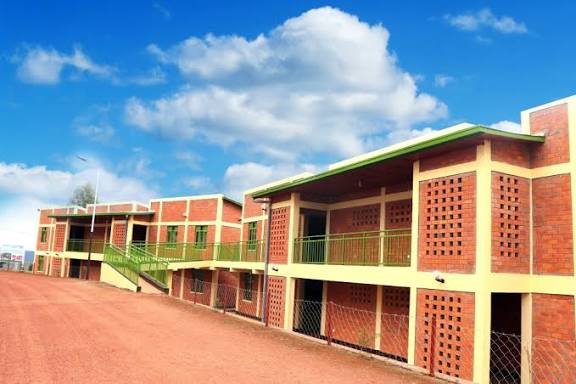
Two model villages were constructed, accommodating 100 households relocated from high-risk areas